Modern technology for the campus & classroom
From K–12 districts to higher education, technology is reshaping how students learn, how educators teach, and how institutions operate. Redesign helps educational institutions modernize infrastructure, strengthen cybersecurity, and adopt emerging technologies such as AI without compromising security, budgets, or the student experience.

Educational technology in K-12 and higher education
Educational technology developments over the past five years have transformed both the campus and the classroom—from how students learn and educators teach to how institutions operate, secure data, and manage infrastructure.
Artificial intelligence has reached an early crossroads in education. Schools and universities need to account for the costs, vulnerabilities, and management challenges that come with new AI tools and infrastructure.
At the same time, these tools must still capture real value in the form of ROI and academic competitiveness, while also keeping pace with peer institutions.
To achieve this, institutions must take all their end users into account: how educators, faculty, and students will each use these tools for research, optimization, workload balance, and countless other use cases.
13%
Projected decline in US high school graduates by 2041.
Trends & challenges in education IT
From AI readiness to cybersecurity and infrastructure modernization, Redesign helps education organizations turn complex technology priorities into practical strategies, and then helps execute them.
AI tools
From K-12 classrooms to higher education research facilities, artificial intelligence is something every administration is considering. The possibilities of a more personalized curriculum, generative tools, and the potential for relationship-building between students and teachers make this technology appealing and exciting. However, concerns about safe application remain top-of-mind: institutions must keep security and the student experience intact as these tools roll out.
Cybersecurity
Cybersecurity is becoming increasingly expansive and complex in education. Planning a well-rounded strategy that includes multi-factor authentication, threat-recognition training, and incident response plans helps create layers of protection for all end users and devices; however, as technology advances, threats evolve as well. This makes cybersecurity an always-on practice in education.
Student data management
Every element of the student experience can be captured digitally. Used well, that data can shape each student’s experience, creating more engaging programs designed for success. However, the data must be properly categorized, securely stored, and easily retrievable before it can be applied.
Resource challenges
One common cybersecurity obstacle for educational institutions is the capacity and resources required to implement an effective strategy. With constrained budgets, staff shortages, and the complexity of these tools, half the challenge is simply putting a robust cybersecurity plan into action.
Training & preparation
Keeping everyone with access to your network secure is critical, but what about malicious attacks that seem normal? Ransomware and social-engineering attacks are on the rise, and it takes only one bad click to open the floodgates. Managing your cybersecurity challenges means more than the technology you deploy; it also requires ongoing training and refined best practices to keep your end users secure.
Preparing for AI threats
Part of the growing cyber threat is the evolution of AI into a weapon for bad actors. Ironically, one of the best solutions to these AI threats is an AI cybersecurity strategy. “Using AI to protect against AI” might seem counterintuitive, but it's rapidly becoming one of the most effective uses of AI in campus security.
Rising technology costs
Rising technology costs have collided with unpredictable budget constraints. In short: making the most of every investment has never mattered more. Institutions must do more with less while still delivering a secure, positive experience for students and faculty.
Advancing research in higher education with next-gen computing
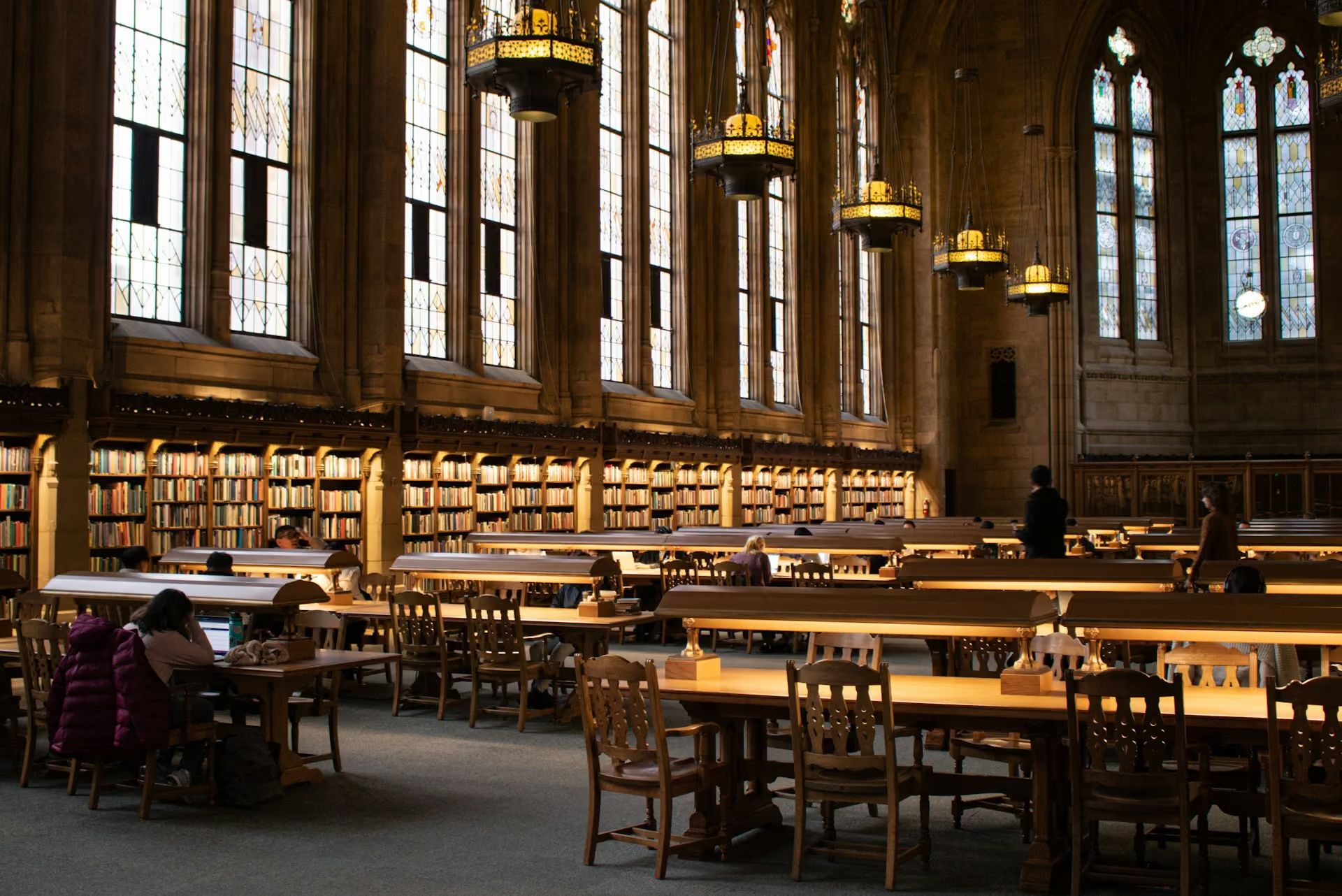
When the University of Washington set out to build Tillicum, its next-generation AI and computing platform, it faced several challenges, from legacy infrastructure to budget planning. Redesign worked alongside the UW-IT Research Computing team to design a complex supercomputing architecture and strategize solutions for networking, AI server configuration, and storage, all to fit an ambitious platform within a public institution's budget.
Explore how Redesign designs data center solutions built for scale and budget.

Technology strategy built for education
Addressing the challenges and digital threats of a modern classroom or campus requires new strategic thinking. You don't need to take this on alone.
Modernizing an education environment is about making the right investments across infrastructure, cybersecurity, cloud, data, and emerging technologies, and ensuring they work together.
Redesign helps K–12 districts and higher education institutions assess their current environments, identify gaps and opportunities, evaluate solutions, and implement technology aligned to their operational, academic, and financial priorities.
Whether you're modernizing existing infrastructure, strengthening your security posture, preparing for AI, or evaluating what's next, we bring together deep technical expertise and a broad technology ecosystem to help you make informed decisions and turn strategy into execution.
Trusted advisor
Work with an expert who will help you explore and understand your options and make informed choices that work for your organization.
Pathfinder
Our proprietary search portal that empowers you to search for products you want, easily compare brands and pricing, and get a holistic view of your options.
Managed services
Handle evolving threats and adopt new technology with experts who will get the most out of your technology and budget, without straining your resources or staff.
Product & partnership solutions
From firewalls, cloud, and security, to scalable solutions, we offer products and partnerships that enhance and optimize your IT environment.
Value with velocity in education technology
Across K-12 and higher education, Redesign follows the same four steps to identify and address each institution's unique technology needs.
Assess
Give us 30 minutes of your time to conduct a brief discovery. We'll perform an in-depth audit of your organization's IT environment using industry-standard tools that integrate into Redesign's proprietary assessment portal.
Propose
We select, design, and quote recommended solutions in a detailed proposal with a current-state analysis, solution options, and financial summary, so that you can make the most informed decision possible.
Implement
Our world-class project managers and certified delivery engineers will ensure you receive quick time-to-value as we execute the plan.
Validate
Redesign provides ongoing assessments of the implemented solutions to ensure you receive the expected technology and business outcomes.
Let's build what's next for your education environment.
Whether you're looking to secure your campus infrastructure, deploy AI tools strategically across your educational environment, train your staff to recognize the latest threats, or upgrade your K-12 or higher-education IT ecosystem, The Redesign Group is here to help.